
How Age Checks Can Protect Privacy

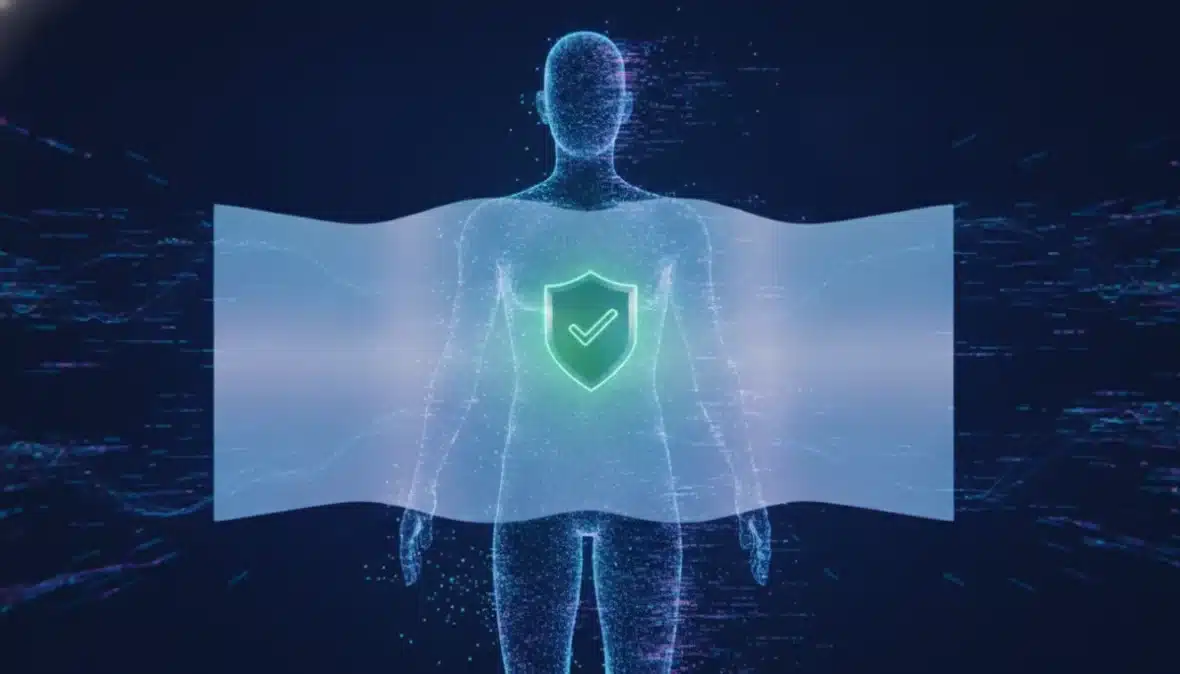
Age-restricted services often ask for far more than they need. Instead of simply confirming that someone is old enough, they may collect a passport scan, a driver’s licence image, or a full identity record just to validate a single requirement.
Zero-knowledge proofs change that model by letting a person show they meet an age threshold without exposing a birth date, name, ID number, or any other personal detail. This approach, often called ZK-KYC, is drawing interest from gambling, crypto, and fintech platforms that want stronger verification with less sensitive data on file.
Why a Zero-Knowledge Proof Matters
A zero-knowledge proof is a cryptographic technique that confirms a statement is true while keeping the underlying information hidden. In an identity setting, the statement might be as narrow as “this user is over 18” or “this user is over 21,” with nothing else revealed about the person behind it.
Systems built with zk-SNARKs or zk-STARKs allow a verifier to validate the claim mathematically without gaining access to the original document or personal record. The platform receives proof of eligibility, but it does not receive the actual identity data that created that proof.
That separation is the main attraction. Instead of sending around scans and numbers that can be copied, stored, or leaked, only the proof itself moves between the user and the platform.
How the Process Usually Unfolds
ZK-KYC generally works in a sequence that keeps identity checking and identity disclosure apart. The user is verified once by a trusted issuer, and after that the credential can be used to prove facts without exposing the underlying record each time.
- A trusted issuer such as a government identity system, a bank, or a licensed identity provider confirms the user’s identity and age through standard KYC checks.
- After verification, the issuer creates a cryptographic credential and places it in the user’s wallet or device rather than on a company server.
- When the user needs to access an age-gated service, their device generates a zero-knowledge proof based on that credential.
- The platform checks the proof against the issuer’s public parameters and confirms the age claim without seeing the credential or the personal details behind it.
This structure lets age be proved again and again across different services while the original identity document stays with a single trusted issuer. The platform gets what it needs to make the decision, and nothing more.
What Traditional KYC Puts at Risk
Standard KYC systems usually require companies to collect and retain copies of government-issued identification to satisfy compliance rules. That creates a large privacy and security burden, because every stored scan becomes a potential target for criminals and a liability for the platform holding it.
The issue is especially sensitive in online gambling and crypto, where the rules around age checks and anti-money-laundering controls are strict, yet the data itself is highly attractive to attackers. A breach in these sectors can expose names and birth dates alongside records that connect real identities to financial or gambling activity, which raises the stakes far beyond a routine data leak.
ZK-KYC does not remove the need for verification. It simply shifts where the sensitive information lives and limits how many parties ever see it.
Current Uses and Experimental Rollouts
The idea is no longer limited to theory. Several projects are already testing how privacy-preserving identity checks can work in real-world systems, and the common thread is selective disclosure rather than total exposure.
Digital identity wallets being developed under frameworks such as the European Union’s eIDAS 2.0 regulation are designed to let people prove specific traits from a government-backed digital ID without revealing the entire document. That means a person could show age or residency while keeping the rest of the record private.
Crypto-related proof-of-personhood projects, including Worldcoin’s verification system, have also explored cryptographic methods that confirm uniqueness or eligibility without handing every app full biometric or identity data. The aim is to reduce repeated disclosure while still stopping fraud and duplicate accounts.
Identity infrastructure tools such as Polygon ID and zkPass are building developer-facing systems for age checks, jurisdiction checks, and other verifiable attributes. Their work points in the same direction: proving a claim without opening up the complete identity file behind it.
Where the Model Still Has Gaps
Even with its privacy advantages, ZK-KYC brings practical and regulatory challenges that cannot be ignored. The cryptography may be strong, but the wider system still depends on issuers, rules, and user experience.
- Trust still begins with a real-world issuer. Someone must first check the original identity document and issue the credential, so the reliability of the whole system depends on that first step.
- Revocation is more complicated. If a credential must be cancelled because of fraud or a legal change, the system needs a clear revocation process instead of a simple database edit.
- Regulatory acceptance is uneven. Many jurisdictions have not yet decided exactly how zero-knowledge age proofs fit into existing KYC and age-verification rules.
- User adoption is still a hurdle. Managing cryptographic credentials usually requires a wallet, a device, and enough technical comfort to use them correctly.
These limits do not undermine the concept, but they do explain why adoption has been gradual. The technology is promising, yet the surrounding infrastructure still has to mature before it can replace older methods on a broad scale.
Why Regulated Platforms Are Paying Attention
For gambling operators, crypto exchanges, and other regulated services, the appeal is straightforward. ZK-KYC offers a way to meet age-verification demands while keeping less sensitive information on company servers, which reduces breach exposure and can ease privacy obligations under rules such as GDPR.
Widespread use will depend less on whether the cryptography works and more on whether regulators, identity issuers, and platforms can agree on common standards for issuing, trusting, and auditing these proofs. Until that happens, many organisations will likely use zero-knowledge checks alongside traditional KYC instead of replacing their existing systems outright.
The direction is still clear. The next stage of digital verification is moving toward a model where proving eligibility does not require surrendering the very information a person wants to keep private.
