
Busting Baccarat’s Pattern Myths: Math Exposes Truth

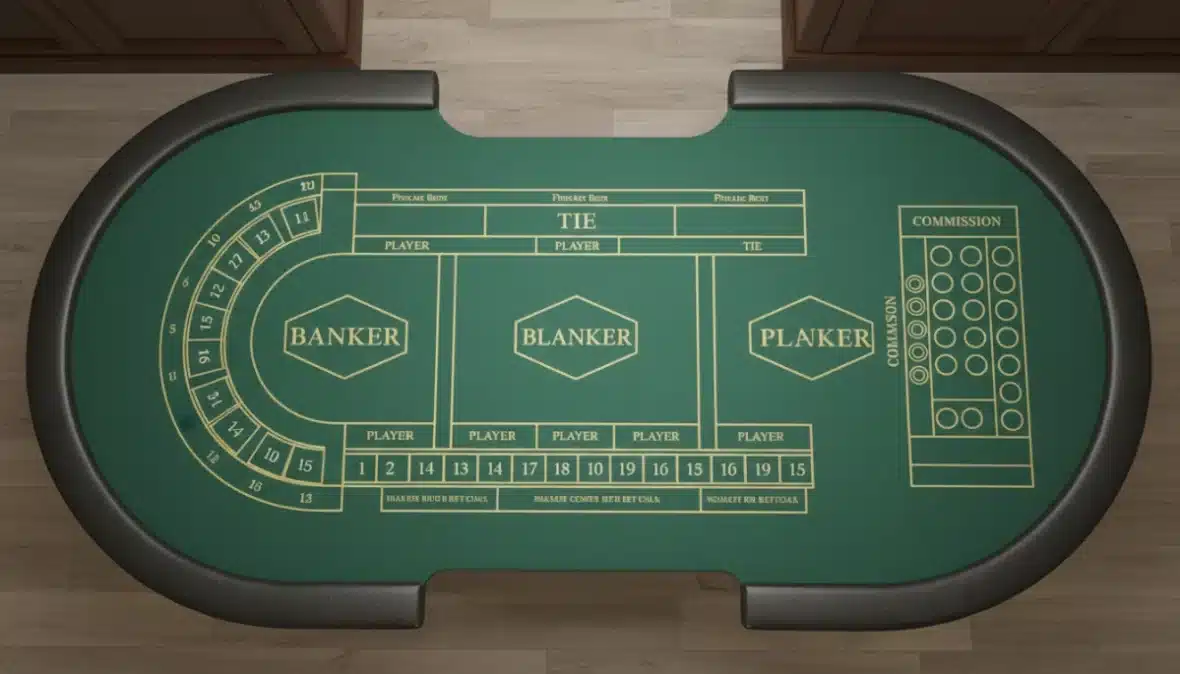
Understanding the Allure of Tracking Patterns in Baccarat
In casinos across Canada and beyond, baccarat captivates players with its sophisticated charm and fast pace. Many enthusiasts scribble notes on scorecards or stare intently at digital displays showing past outcomes, convinced they can predict the next hand. This widespread belief in spotting patterns persists, even though rigorous mathematics reveals it as a complete illusion. Players often fill high-stakes rooms or online live tables, meticulously recording results in hopes of uncovering a winning sequence.
The game’s tracking tools, generously supplied by casinos, fuel this fascination. From paper scorecards to elaborate electronic boards, these aids make it easy to log every Banker, Player, or Tie result. Yet, despite their popularity, these methods offer no edge. This article delves deeply into the psychology behind this myth, the unyielding math that debunks it, and practical strategies for enjoying baccarat responsibly.
Key Tools Players Use to Hunt for Patterns
Baccarat stands out for its array of specialised tracking systems, designed to visualise sequences in compelling ways. Casinos equip tables with these tools to keep players engaged, but they do little more than record history.
- Bead plate: A simple grid marking outcomes in columns, like a calendar of results, showing the raw sequence without embellishment.
- Big road: The centrepiece display, using red and blue circles to build columns for streaks of Banker or Player wins, creating tall towers that suggest momentum.
- Big eye boy: A derived chart that compares patterns within the big road, highlighting repetitions or changes to spot supposed trends.
- Small road and cockroach pig: Similar secondary roads that drill deeper into alternations, adding layers of complexity that mimic advanced analysis.
These displays transform straightforward results into intricate maps. To newcomers, they appear as powerful forecasting instruments. In reality, they merely repackage random events, tricking the eye into seeing order where none exists.
How These Displays Mislead the Observer
Each tool reformats history to emphasise streaks or shifts, but none influences future hands. The big road’s columns grow impressively during runs, prompting bets on continuation. Derived roads then scan for consistency in those columns, reinforcing the hunt. This visual layering creates an illusion of predictability, but it stems from past data alone, ignoring the independence of each new deal.
The Ironclad Math Behind Independent Hands
At baccarat’s heart lies a fundamental truth: every hand stands alone. In a typical shoe of six to eight decks, prior draws remove cards, causing minor shifts in the deck’s makeup. However, these changes are negligible—far too small for pattern-based predictions to gain traction.
Probabilities remain constant across hands:
- Banker win: About 45.86 per cent, the most favourable due to rules favouring it slightly.
- Player win: Roughly 44.62 per cent, a close second.
- Tie: Around 9.52 per cent, tempting with high payouts but poor value.
No matter the streak—be it ten Bankers or alternating Player wins—the odds reset completely. A long Banker run does not tilt the scales toward Player; the shoe holds no grudge or sense of fairness. This independence crushes the myth, as past results exert zero pull on what follows.
Debunking the Gambler’s Fallacy in Depth
The gambler’s fallacy drives much of this misguided belief. After observing a streak, players anticipate a reversal, as if probability seeks balance. In truth, randomness produces clusters naturally; five Bankers in a row is commonplace, not a signal. Simulations of millions of shoes confirm this: streaks occur frequently, and betting against them fails over time. The house edge persists relentlessly, turning any pattern chase into a loser’s game.
Why Our Brains Crave Patterns Despite the Evidence
Human cognition explains the myth’s endurance. Evolution wired us to detect patterns for survival—identifying rustling bushes as threats or tracking animal migrations saved lives. False positives cost little; missed dangers were fatal. Today, this trait backfires in games like baccarat.
Behavioural studies reveal we underestimate randomness’s clumpiness. People expect even distributions, but true chance delivers hot streaks and cold spells. In baccarat, a big road full of towering columns feels prophetic, yet it’s just normal variation. Casinos exploit this by providing displays, knowing they boost engagement and bets without altering odds.
Cognitive Biases at Play
Several biases compound the error:
- Confirmation bias: Players remember pattern successes, ignoring failures.
- Representativeness heuristic: Judging likelihood by superficial similarity to stereotypes of randomness.
- Availability bias: Recent streaks loom larger in memory than full statistics.
These mental shortcuts make pattern spotting irresistible, even when math proves it futile.
Flawed Betting Systems Reliant on Patterns
Countless strategies lean on the myth, promising profits through progression or trend following. All crumble under scrutiny.
Martingale: Double bets after losses, assuming a win is due. A modest streak wipes out bankrolls quickly, ignoring fixed odds.
Paroli: Let wins ride during streaks. It captures variance briefly but succumbs to the house edge long-term.
Trend systems: Bet with the streak (follow) or against it (chop). Both treat history as prophecy, yielding no advantage.
Progressive systems amplify swings, creating exciting wins or devastating losses. With negative expectation, mathematics guarantees the casino’s profit over volume.
Real Strategies That Deliver Value
Ditching patterns unlocks genuine play. Focus on bets with proven edges:
- Banker bet: 1.06 per cent house edge post-5 per cent commission—best choice.
- Player bet: 1.24 per cent edge—solid alternative.
- Avoid Tie: 14.36 per cent edge makes it a poor pick despite 8:1 payout.
- Skip side bets: Often worse than Tie, varying by rules.
Bankroll discipline reigns supreme. Set budgets, enforce loss limits, resist chasing, and view sessions as paid fun. Track time, not cards, for sustainable enjoyment.
Embracing Baccarat’s True Appeal
Baccarat thrives on elegance, not prediction. Its deliberate rhythm and minimal decisions create an immersive vibe at quality tables. Free from pattern pressure, players relax into the flow, savouring the ritual over illusory control.
The math liberates: no decoding needed, just informed choices within limits. Patterns decorate the scorecard but dictate nothing. Approach with this clarity, and baccarat reveals its refined pleasure unclouded by myth.
